“Your skin is not a problem to be solved,
it's a relationship to build.”
Explore ingredients, skin layers, and thoughtful routines designed to support healthy skin. Our interactive guide helps make skin care science clear, approachable, and empowering.
Explore Ingredient Science
Ceramides
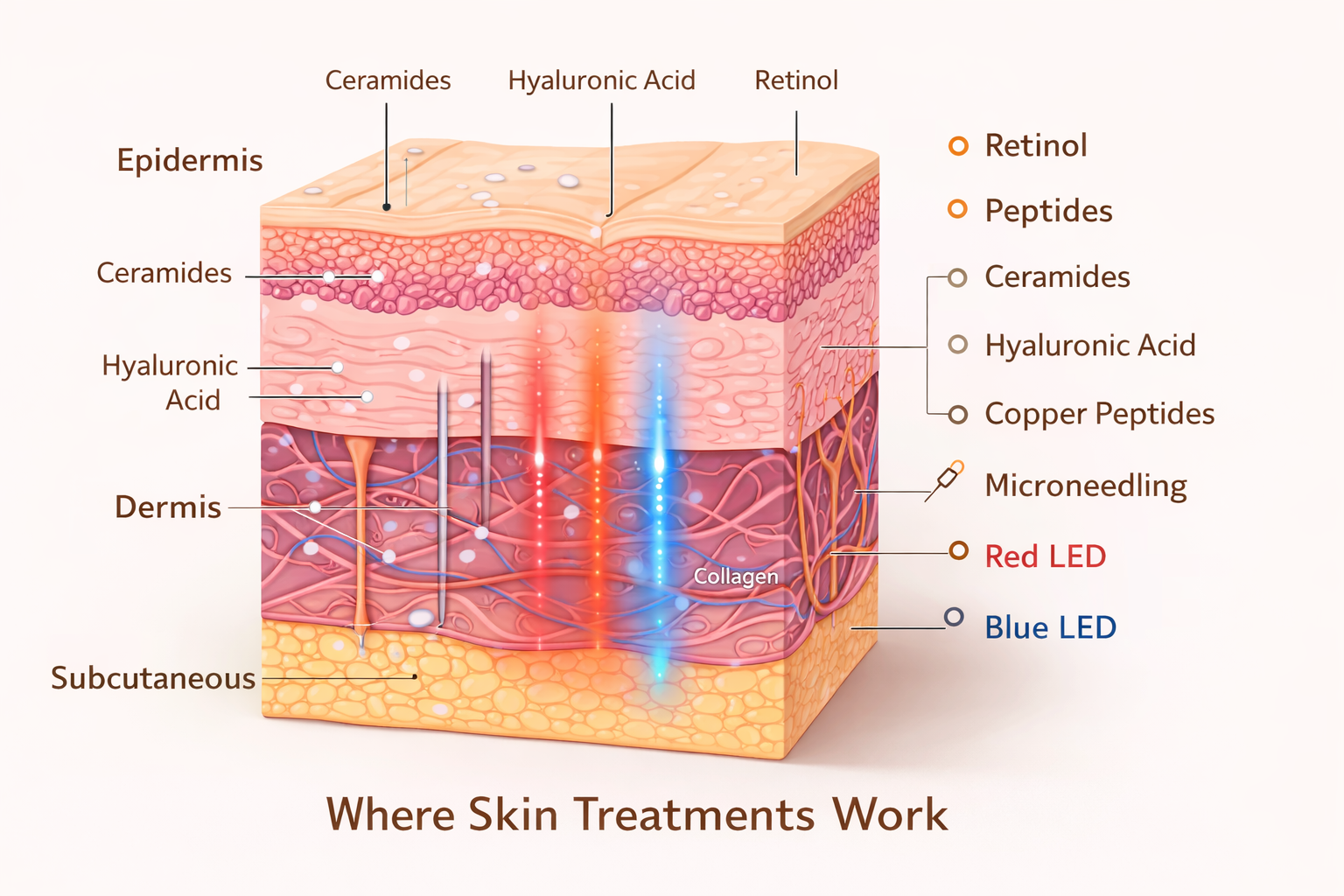
Ceramides are lipids naturally found in the skin barrier. They help seal in moisture, protect against environmental stressors, and support overall skin resilience.
Understanding Skin Layers
Epidermis
The epidermis is the outermost layer of the skin and acts as the primary protective barrier. It shields the body from pollution, bacteria, and moisture loss.
Dermis
The dermis contains collagen, elastin, and connective tissue that provide strength, elasticity, and structural support for the skin.
Hypodermis
The hypodermis is the deepest layer and contains fat cells that cushion and insulate the body while supporting overall skin structure.
Peptides
Peptides are short chains of amino acids that help signal the skin to produce collagen and maintain firmness and elasticity.
Vitamin C
Vitamin C is a powerful antioxidant that helps brighten skin tone, support collagen production, and protect against environmental damage.
Retinol
Retinol is a vitamin A derivative that helps accelerate skin cell turnover, improve texture, and reduce the appearance of fine lines.
Hyaluronic Acid
Hyaluronic acid is a humectant capable of holding large amounts of water within the skin. It helps the skin appear hydrated, plump, and supple by attracting and retaining moisture.
Ingredient Compatibility Guide
| Combination | Works Well? | Notes |
|---|---|---|
| Ceramides + Retinol | ✔ Yes | Ceramides help support the barrier and reduce dryness. |
| Peptides + Hyaluronic Acid | ✔ Yes | A hydrating and supportive combination. |
| Vitamin C + Hyaluronic Acid | ✔ Yes | Brightening plus hydration works very well. |
| Vitamin C + Retinol | ⚠ Sometimes | Often separated into morning (Vit C) and evening (Retinol). |
| Ceramides + Hyaluronic Acid | ✔ Yes | Excellent barrier and hydration support. |
How to Layer Your Skincare
Morning Routine
1. Cleanser
Start with a gentle cleanser to refresh the skin.
2. Vitamin C
Brightens and helps protect from environmental stress.
3. Hyaluronic Acid
Helps attract hydration and plump the skin.
4. Moisturizer
Supports skin barrier and comfort.
5. SPF
Daily sun protection is essential.
Evening Routine
1. Cleanser
Remove makeup, sunscreen, and impurities.
2. Peptides
Support collagen and skin resilience.
3. Retinol
Encourages cell turnover and smoother texture.
4. Ceramides
Help strengthen and restore the barrier.
5. Moisturizer
Locks in hydration overnight.
Advanced Skin Science
Copper Peptides
Copper peptides such as GHK-Cu help support collagen production, improve skin firmness, and assist with skin repair. They are often used in advanced anti-aging and skin recovery routines.
Microneedling
Microneedling creates tiny controlled micro-injuries in the skin that stimulate collagen production and natural repair. It can improve fine lines, texture, and acne scars when performed properly.
LED Light Therapy
LED therapy uses different wavelengths of light to support skin health.
Red Light: collagen support and anti-aging
Blue Light: acne-causing bacteria reduction
Near Infrared: deeper tissue repair
Stem Cells & Exosome Science
Stem cells are unique cells capable of developing into different types of tissue cells. In skin science, researchers focus on the signals these cells send to guide repair and regeneration.
Exosomes are tiny messenger particles released by cells. They carry proteins and signaling molecules that help skin cells communicate and coordinate repair.
- Support cellular communication
- Encourage collagen and elastin activity
- Assist skin recovery after treatments
- Work primarily in the dermal layer
Research into stem cell signaling and exosomes continues to expand in dermatology and regenerative medicine.
Skin Care for Women of Color
Melanin-rich skin has natural strengths but can be more prone to hyperpigmentation after inflammation. Gentle treatments, barrier protection, and consistent sunscreen are essential for maintaining even tone.
Exosomes & Stem Cell Science
Exosomes are signaling particles that help cells communicate and support regeneration. In skin science they are studied for their ability to assist healing, collagen stimulation, and post-treatment recovery.
Lifestyle Foundations for Healthy Skin
Healthy skin is supported not only by topical skincare, but also by daily lifestyle habits. Sleep, movement, and nutrition are long-term investments that influence collagen production, skin repair, circulation, and overall skin resilience.
Lifestyle Foundations of Skin Health
Healthy skin is supported not only by topical care but also by daily lifestyle habits that influence repair, circulation, and long-term structural support.
Sleep
During sleep the skin enters its primary repair phase. Collagen production increases, cell turnover accelerates, and the skin barrier restores itself. Consistent sleep helps support brighter tone, smoother texture, and improved skin resilience.
Movement
Regular movement improves circulation, helping deliver oxygen and nutrients to the skin. Healthy blood flow supports a natural glow and helps remove metabolic waste that can contribute to dull or stressed skin.
Resistance training: Strength training supports bone density and structural support as we age. Strong bones and muscles help maintain posture and facial structure, contributing to long-term skin appearance and overall wellness.
Nutrition
Nutrients such as antioxidants, healthy fats, and protein support collagen formation and skin barrier health. Hydration, balanced meals, and nutrient-rich foods help maintain elasticity, clarity, and long-term skin vitality.
Your Skin Investment Timeline
Healthy skin improves gradually with consistent care. Small daily habits build meaningful results over time.
4 Weeks
Improved hydration, smoother texture, and a brighter overall complexion often appear within the first month of consistent skincare.
3 Months
Collagen production begins to show visible improvements in firmness, elasticity, and fine lines with consistent routines and sun protection.
1 Year
Long-term commitment to skin care, lifestyle habits, and sun protection helps maintain stronger skin structure and slower visible aging.
Daily Sun Protection
Sun protection is one of the most important long-term investments for healthy skin. UV exposure contributes to collagen breakdown, pigmentation changes, and premature aging.
- SPF should be used every day, even when indoors.
- UVA rays penetrate windows and contribute to skin aging.
- Daily sunscreen helps protect collagen and skin structure.
- Consistent use supports long-term clarity, tone, and elasticity.
Factors That Interfere With Skin Structure
Certain environmental and lifestyle factors can weaken collagen, damage the skin barrier, and accelerate visible aging.
- Excess sun exposure without protection
- Smoking and environmental pollutants
- Chronic sleep deprivation
- High sugar diets that contribute to collagen glycation
- Over-exfoliation or aggressive skin treatments
- Chronic stress and inflammation
Your Skin Investment Timeline
Healthy skin improves gradually with consistent care. Small daily habits build meaningful results over time.
4 Weeks
Improved hydration, smoother texture, and a brighter overall complexion often appear within the first month of consistent skincare.
3 Months
Collagen production begins to show visible improvements in firmness, elasticity, and fine lines with consistent routines and sun protection.
1 Year
Long-term commitment to skin care, lifestyle habits, and sun protection helps maintain stronger skin structure and slower visible aging.
Daily Sun Protection
Sun protection is one of the most important long-term investments for healthy skin. UV exposure contributes to collagen breakdown, pigmentation changes, and premature aging.
- SPF should be used every day, even when indoors.
- UVA rays penetrate windows and contribute to skin aging.
- Daily sunscreen helps protect collagen and skin structure.
- Consistent use supports long-term clarity, tone, and elasticity.
Factors That Interfere With Skin Structure
Certain environmental and lifestyle factors can weaken collagen, damage the skin barrier, and accelerate visible aging.
- Excess sun exposure without protection
- Smoking and environmental pollutants
- Chronic sleep deprivation
- High sugar diets that contribute to collagen glycation
- Over-exfoliation or aggressive skin treatments
- Chronic stress and inflammation
The 4 Pillars of Skin Longevity
Healthy skin is supported by consistent daily habits and thoughtful long-term care. These four pillars work together to maintain collagen structure, barrier strength, and overall skin vitality.
1. Sun Protection
Daily SPF helps protect collagen fibers and prevents UV damage that accelerates skin aging. Consistent sun protection is one of the most important long-term investments for healthy skin.
2. Barrier Health
A strong skin barrier helps retain moisture and protects against environmental stress. Ingredients such as ceramides, peptides, and gentle hydration support this protective layer.
3. Collagen Support
Collagen structure can be supported with ingredients and treatments such as retinol, peptides, microneedling, and red LED therapy. These approaches help encourage skin renewal and firmness.
4. Lifestyle Foundations
Sleep, nutrition, movement, and stress management support circulation, cell repair, and overall skin resilience. Healthy lifestyle habits work together with skincare to support long-term skin vitality.
The 4 Pillars of Skin Longevity
Healthy skin is supported by consistent daily habits and thoughtful long-term care. These four pillars work together to maintain collagen structure, barrier strength, and overall skin vitality.
1. Sun Protection
Daily SPF helps protect collagen fibers and prevents UV damage that accelerates skin aging. Consistent sun protection is one of the most important long-term investments for healthy skin.
2. Barrier Health
A strong skin barrier helps retain moisture and protects against environmental stress. Ingredients such as ceramides, peptides, and gentle hydration support this protective layer.
3. Collagen Support
Collagen structure can be supported with ingredients and treatments such as retinol, peptides, microneedling, and red LED therapy. These approaches help encourage skin renewal and firmness.
4. Lifestyle Foundations
Sleep, nutrition, movement, and stress management support circulation, cell repair, and overall skin resilience. Healthy lifestyle habits work together with skincare to support long-term skin vitality.
Build a Simple Skin Routine
Choose your skin goal, skin type, and age range to see a simple educational routine framework.