Skin Science
Understanding Your Skin
Science-backed knowledge to help you make confident, informed choices about your skincare routine.
Where Ingredients Work in Your Skin
Different active ingredients penetrate to different depths. Understanding which layer each product targets helps you build a more effective routine.
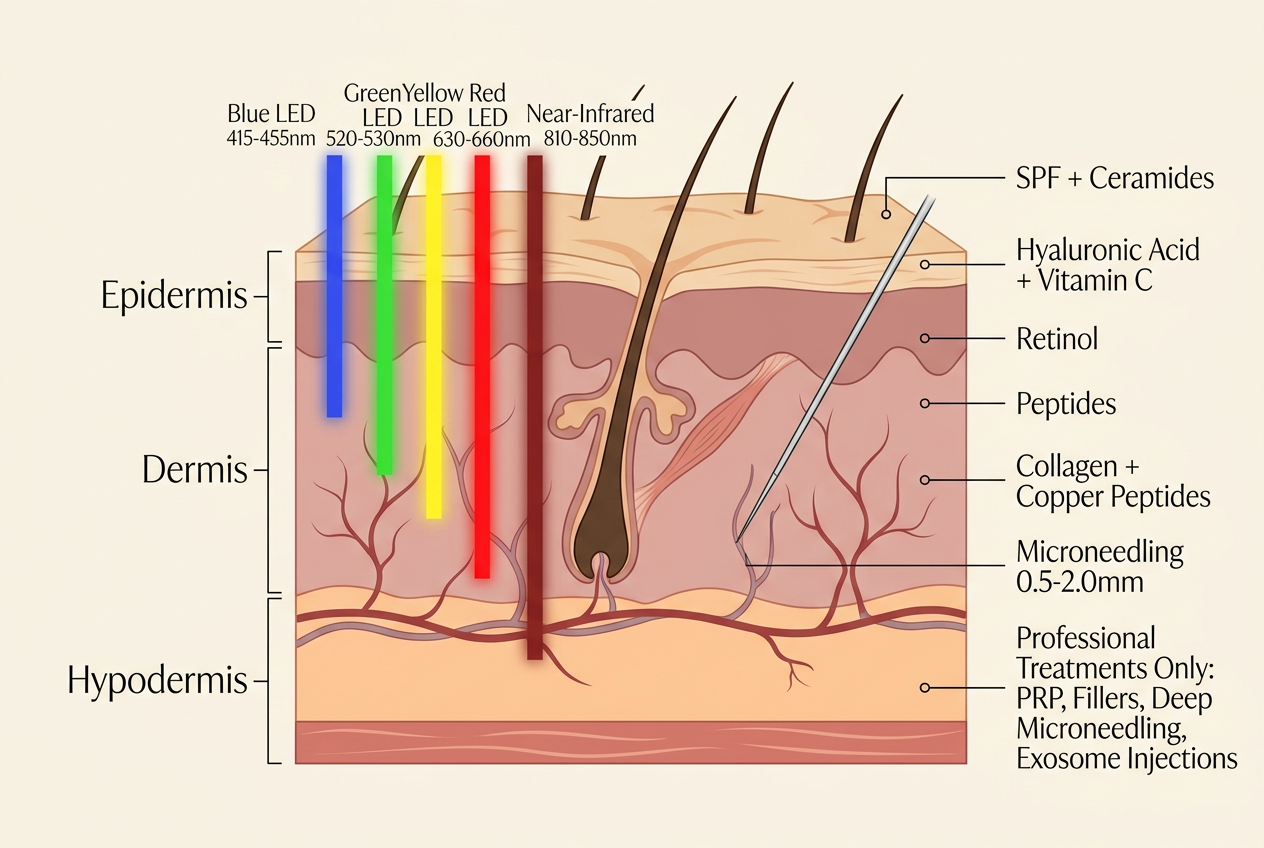
Epidermis
The outer protective barrier
SPF, Ceramides, Hyaluronic Acid, Vitamin C
Dermis
The structural support layer
Retinol, Peptides, LED Light Therapy
Hypodermis
Reached only by professional treatments
PRP, Fillers, Deep Microneedling, Exosome Injections
Ceramides
Ceramides are lipids that make up over 50% of your skin's barrier. They lock in moisture and protect against environmental damage. A weakened ceramide layer leads to dryness, irritation, and sensitivity.
Tip: Look for ceramide-rich moisturizers to strengthen your skin barrier, especially in winter.
Caution: Generally well-tolerated. If you have fungal acne, check that the ceramide product doesn't contain fatty acids that may worsen it.
Peptides
Peptides are short chains of amino acids that signal your skin to produce more collagen and elastin. They help firm, smooth, and repair skin over time without irritation.
Tip: Peptide serums work well layered under moisturizer — gentle enough for daily use on all skin types.
Caution: Avoid combining with strong acids (AHA/BHA) in the same step — low pH can break down peptide bonds and reduce effectiveness.
Collagen
Collagen is the structural protein that keeps skin plump and firm. Production naturally declines with age, leading to fine lines and loss of elasticity. Supporting collagen is key to graceful aging.
Tip: Vitamin C, retinol, and peptides all stimulate collagen production from within.
Caution: Collagen supplements may contain common allergens (shellfish, eggs). Check labels if you have food sensitivities or allergies.
Retinol
Retinol (vitamin A) accelerates cell turnover, fades dark spots, smooths texture, and boosts collagen. It's considered the gold standard in anti-aging skincare by dermatologists worldwide.
Tip: Start low (0.25%) and slowly increase. Always use sunscreen the next morning.
Caution: ⚠️ Do NOT use during pregnancy or breastfeeding. Can cause dryness, peeling, and sun sensitivity — always introduce gradually.
Hyaluronic Acid
Hyaluronic acid is a humectant that holds up to 1,000× its weight in water. It plumps skin, reduces the appearance of fine lines, and keeps your complexion dewy and hydrated throughout the day.
Tip: Apply to damp skin and seal with a moisturizer for maximum hydration.
Caution: In very dry or low-humidity environments, HA can draw moisture from deeper skin layers. Always layer a moisturizer on top to seal it in.
LED Therapy
LED light therapy uses specific wavelengths to target skin concerns. Blue (415–455nm) kills acne bacteria. Green (520–530nm) targets hyperpigmentation. Yellow (590nm) soothes redness. Red (630–660nm) stimulates collagen. Near-Infrared (810–850nm) penetrates deepest for inflammation and healing.
Tip: Consistent use 3–5 times per week yields the best results. Sessions are painless and non-invasive.
Caution: ⚠️ Avoid if you have epilepsy, are on photosensitizing medications, or have active skin cancer. Consult your dermatologist first.
Barrier Repair
Your skin barrier is the outermost layer that shields against pollutants, bacteria, and water loss. Over-exfoliating, harsh cleansers, and stress can damage it, causing redness and sensitivity.
Tip: Simplify your routine: gentle cleanser, ceramide moisturizer, and SPF. Let your barrier heal.
Caution: While repairing your barrier, avoid actives like retinol, AHAs, and vitamin C until sensitivity subsides.
Skin Care for Women of Color
Melanin-rich skin has natural strengths but can be more prone to hyperpigmentation after inflammation. Gentle treatments, barrier protection, and consistent sunscreen are essential for maintaining even tone.
Tip: Avoid harsh exfoliants and always use SPF — even deeper skin tones need UV protection to prevent uneven pigmentation.
Caution: Avoid high-concentration chemical peels and aggressive lasers without professional guidance — these can trigger post-inflammatory hyperpigmentation.
Copper Peptides
Copper peptides (GHK-Cu) are powerful multi-taskers for both skin and hair. They stimulate collagen and elastin production, promote wound healing, and have antioxidant and anti-inflammatory properties. For hair, copper peptides help increase follicle size, extend the growth phase, and improve thickness and density.
Tip: Look for serums with GHK-Cu — apply to clean skin before moisturizer, and to the scalp for hair benefits.
Caution: ⚠️ Not recommended during pregnancy or breastfeeding. Do not combine with strong acids or vitamin C in the same routine step.
Exosomes & Stem Cell Science
Exosomes are signaling particles that help cells communicate and support regeneration. In skin science they are studied for their ability to assist healing, collagen stimulation, and post-treatment recovery.
Tip: This is an emerging field — look for clinically studied formulations from reputable brands.
Caution: ⚠️ Not FDA-regulated for cosmetic use. Seek treatments only from licensed professionals using clinically studied products.
Microneedling
Microneedling creates controlled micro-injuries using fine needles (0.5–2.0mm) to trigger the skin's natural healing response. This stimulates collagen and elastin production, improving texture, scars, fine lines, and overall firmness over a series of treatments.
Tip: Professional treatments (1.0–2.0mm) yield the best results. At-home derma rollers (0.25–0.5mm) can enhance product absorption.
Caution: ⚠️ Not recommended during active breakouts, infections, or pregnancy. Always seek a licensed professional for deeper needle depths. Avoid retinol and strong acids for 48–72 hours post-treatment.
Ready to Build Your Routine?
Use our interactive routine builder to get a personalized AM/PM skincare plan based on your skin type, goals, and concerns.